What is collective teacher efficacy?
Every team shares a belief about what the team can achieve with its students. Researchers call this collective teacher efficacy (CTE); the belief among teachers in a school that, together, they can plan and deliver the work needed to have a positive impact on students (Goddard, Hoy & Woolfolk Hoy, 2004). It builds on Bandura’s (1977) work on self-efficacy, a person’s conviction that they can do what it takes to achieve a desired outcome. CTE applies that idea to the whole staff.
Hattie (2016) ranked CTE first among the influences on student achievement in his Visible Learning research, with an effect size of 1.57. Socioeconomic status, which lies outside a school’s control, comes in at 0.52.
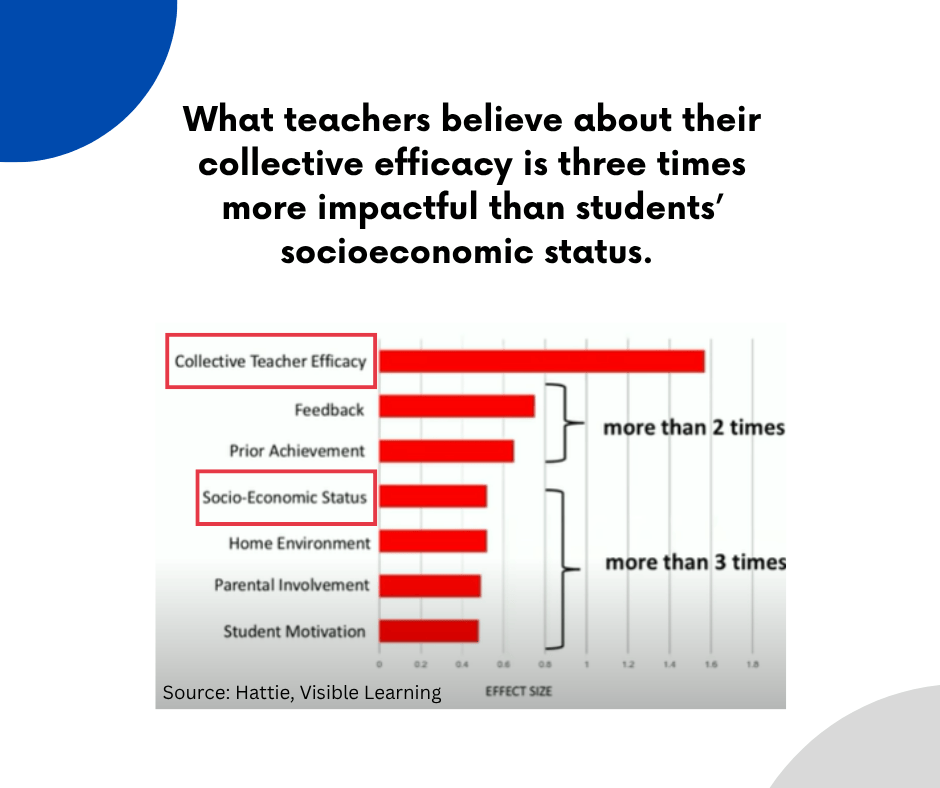
Earlier studies point in the same direction. Bandura (1993) found that a staff’s shared belief in its own effectiveness was more strongly linked to achievement than socioeconomic status. A systematic review by Ramos and colleagues (2014) found that where collective efficacy is high, students’ backgrounds have less effect on their results. For teachers working with high-needs groups, and for the leaders who support them, this is one of the most useful findings in educational research.

Where does collective efficacy come from?
Bandura identified four sources of efficacy:
Mastery experiences are the most powerful, where one sees their own efforts succeed.
Vicarious experiences come from seeing colleagues or similar schools succeed.
Social persuasion comes from credible, trusted colleagues and depends on what Adams and Forsyth (2006) call “norms of openness, collaboration, and cooperation.”
Affective states, the emotional tone of the organisation (Tschannen-Moran & Barr, 2004), are the least influential.
Underneath all four is causal attribution:
- Attribution is the reason a team gives for its students’ achievement.
- Some reasons point outside the school, such as home background or attendance. A team has little control over these.
- Other reasons point to the team’s own choices, such as the strategy used or the timing of feedback. A team can change these.
- When a team explains results through its own actions, it can see a next step and create an action plan.
- Teachers with high efficacy take responsibility for both successes and setbacks (Georgiou et al., 2002).
What does this look like in practice?
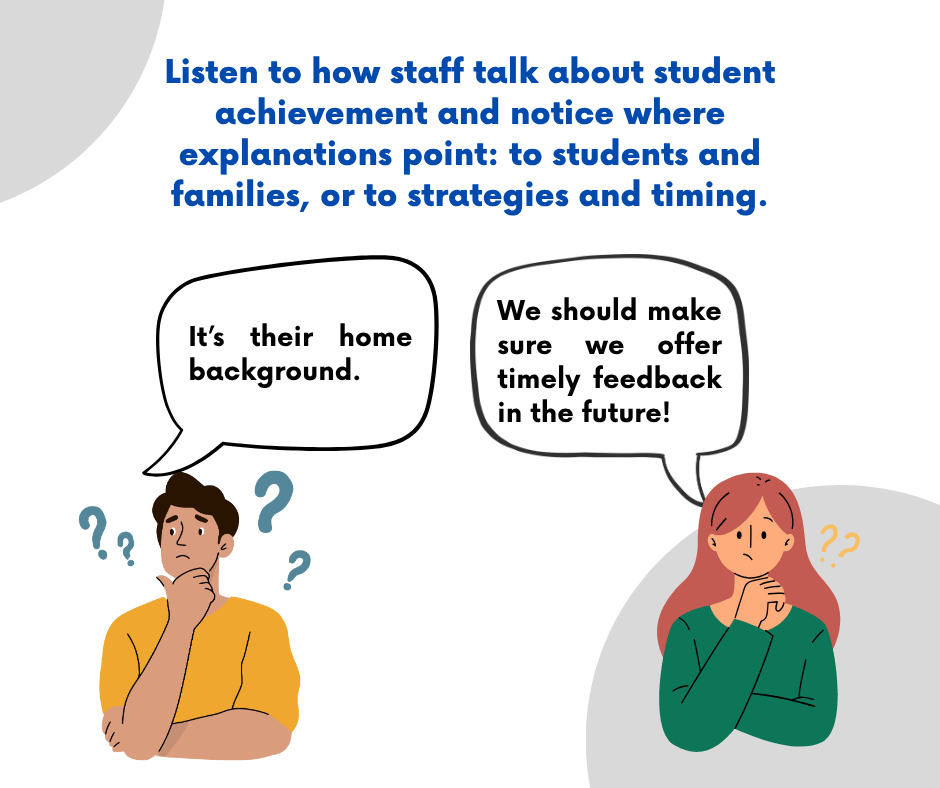
Listen to how staff talk about student achievement
In meetings and PLCs, notice whether explanations point to students and families or to the school’s strategies and timing.
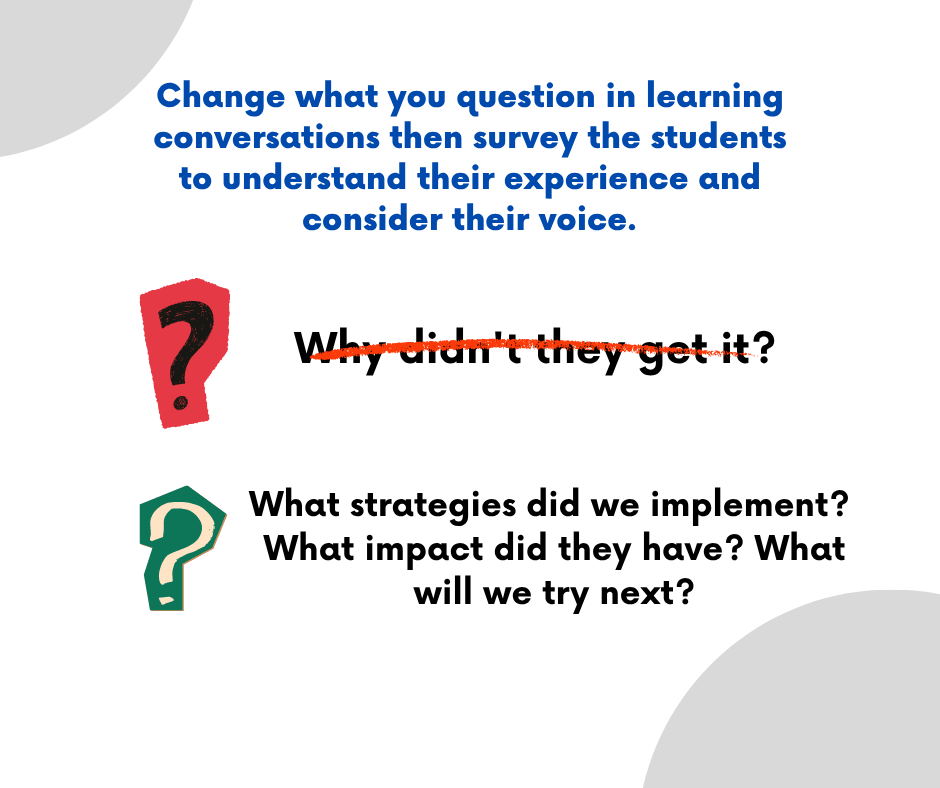
Change what you question in learning conversations
Replace “Why didn’t they get it?” with “What strategies did we implement, what impact did they have, and what will we try next?” Then survey the students to understand their experience and consider their voice.
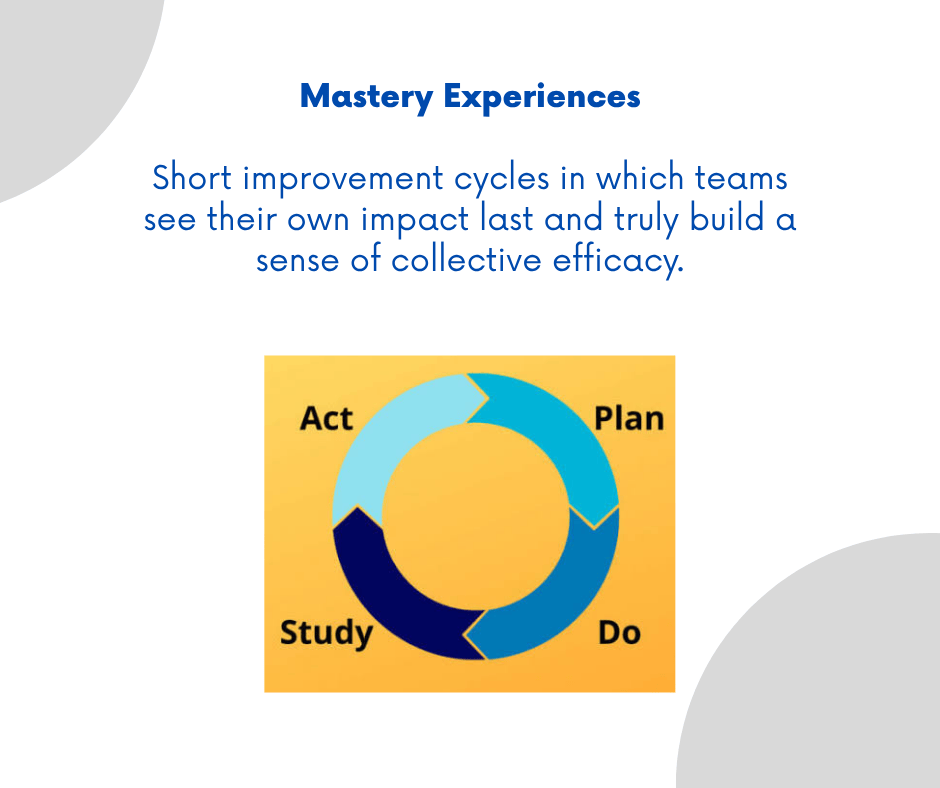
Design for mastery experiences
Short improvement cycles in which teams see their own impact last and truly build a sense of collective efficacy.
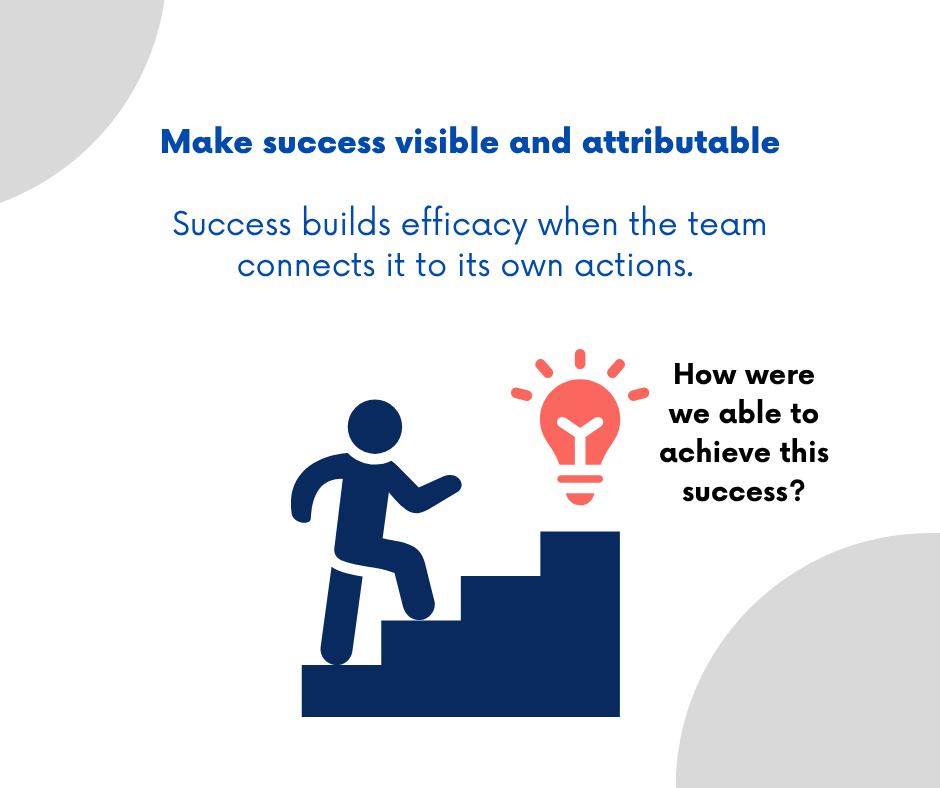
Make success visible and attributable
Success builds efficacy when the team connects it to its own actions. Ask “How were we able to achieve this success?”.
Thoughts and Reflections
The most important distinction in attribution research is controllability. A team can look inward, conclude that it lacks the ability to meet its students’ needs, and close the door as firmly as any external explanation would. Efficacy grows when the cause under discussion is something the team can change, such as a strategy or the timing of feedback.
This is why teacher-led dialogue needs an agency frame. Regular collaboration can still settle into a shared narrative that nothing more is possible, and leaders who keep conversations returning to what the team will try next protect collective efficacy.
Collective efficacy is a perception, so a staff can feel highly confident and still have limited impact on learning. Evidence of impact keeps belief honest, and because success most likely builds efficacy as much as efficacy builds success, short and visible cycles of success are the practical place to begin.
Reference: Donohoo, J. (2017). Collective Efficacy: How Educators’ Beliefs Impact Student Learning. Corwin.



Leave a Reply