The IB PYP has always emphasized the importance of concepts to help students develop deep, transferable understandings. Recent updates to the PYP curriculum continue this focus, offering new strategies for educators. This blog post explores these updates, providing practical guidance for implementation in the classroom.
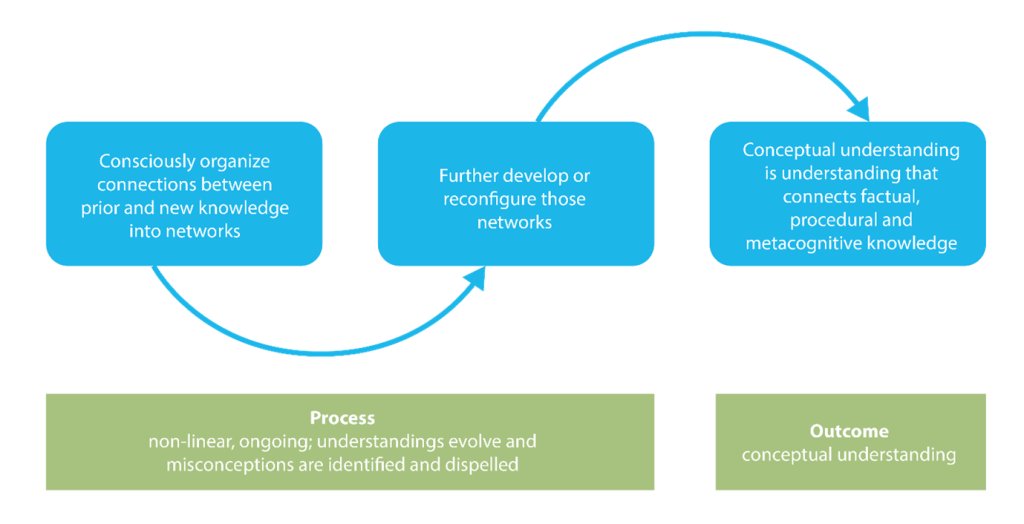
The IB PYP highlights the importance of connecting prior knowledge with new learning, helping students organize and develop knowledge into networks. This approach reminds me of Piaget’s theory of cognitive development, specifically his concept of schemas. Schemas, or mental models, are ways to organize and understand the information we gain about the world. Piaget argues that intelligence is not fixed and can be expanded when individuals are challenged. He suggests that when new learning occurs, we connect the new knowledge to what we already know, adding, modifying or adjusting our schemas. Similarly, the PYP encourages organizing connections between prior and new knowledge into networks, further developing these networks as students learn factual, procedural, and metacognitive knowledge.

Principles into practice, IBO 2024
Why do we want our students to develop conceptual understandings?
Purposeful inquiry, supported by a concept-driven curriculum, fosters this depth of understanding (Wiggins & McTighe, 2005).
Developing conceptual understandings allows students to develop a deeper understanding of the world. When students understand and organize knowledge into concepts, they can develop conceptual understadning by making connections between the concepts. Developing conceptual understanding is the first step in supporting students in transfering their knowledge to different and unfamiliar contexts. For example, understanding the concept of civilization enables students to research any civilization by recognizing common elements like government, writing systems, and geographical influences.
Conceptual Understanding: A civilization is a society organized around a government, a communication system, and a means of food production, and it is affected by the geography of the place where it lives.
Concepts: civilization, government, communication, production, geography.
If the focus is only on knowledge, students will focus on learning about a specific civilization, such as the Mayan civilization, rather than on concepts and conceptual understandings related to civilization. This approach limits their ability to transfer thier understanding to learn about another civilization. Understanding concepts enables students to apply their knowledge broadly and adapt it to different situations, fostering a deeper and more flexible understanding of the world.
So, if the focus is on supporting students in developing conceptual understanding. How can educators support the process?
Supporting Students in Developing Conceptual Understandings
Understanding Concepts
To develop conceptual understandings, students must first understand individual concepts. The IB emphasizes the importance of not only specified concepts (previously key concepts) but also subject-specific, additional concepts (previously related concepts). Students need to acquire the knowledge related to these concepts and develop the ATL skills to research, communicate and think critically about them. We want our students to be able to … “learn to recognize patterns and see the connections between discrete examples to strengthen conceptual understandings” (Principles into practice, IBO 2024). The IB defines concepts as …

Principles into practice, IBO 2024
Concepts as Content Organizers
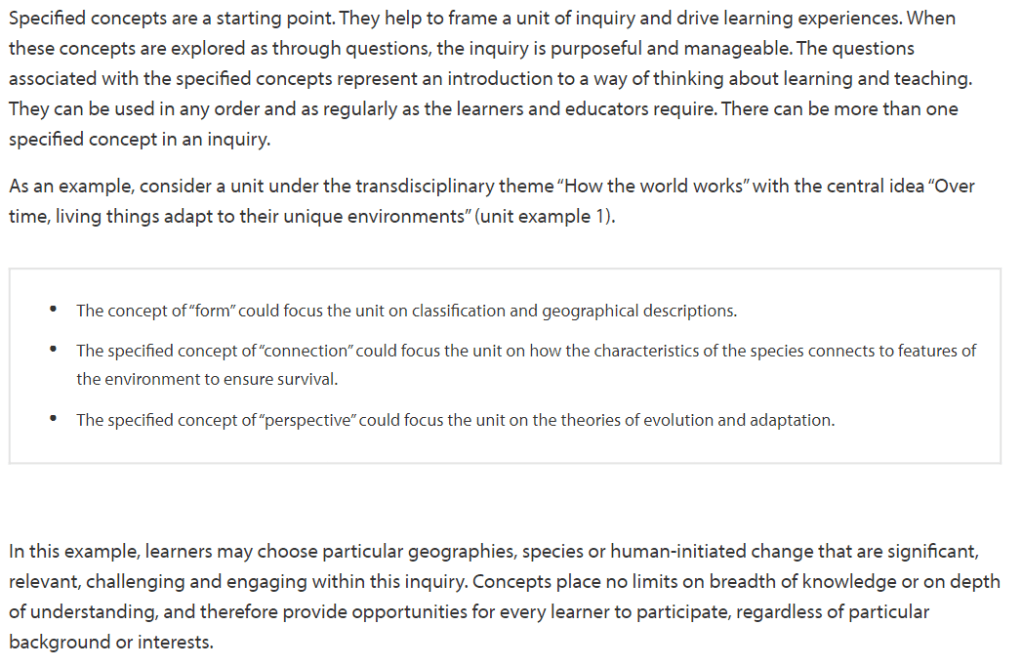
The IB encourages using concepts as content organizers, identifying the content students need to engage with to understand a concept. For instance, to understand ecosystems, students might explore concepts like biotic and abiotic factors, food webs, and interdependence. Developing factual, conceptual and debatable questions to explore the knowledge, skills and concepts supports students in developing conceptual understandings. For example:
- What are the factors in an ecosystem?
- What are food chains?
- How do biotic and abiotic factors rely on each other?
Exploring these questions in context, such as through real life scenarios and case studies of specific ecosystems, helps students make real-life connections, find patterns, and develop conceptual understandings.
Example: In the new publication, the IB provides a great example of using concepts as content organizers.
Principles into practice, IBO 2024
Teaching Strategies
To scaffold students as they explore concepts and develop conceptual understandings, we should offer ample opportunities for them to …
- Identify their prior knowledge and possible misconceptions.
- Categorize acquired information with concepts.
- Make connections between concepts to develop conceptual understandings.
- Identify patterns.
- Test and transfer their conceptual understandings.
The IB Principles into Practice suggests various methods to help students develop conceptual understandings, including provocations. The following posters elaborate on a few of them.
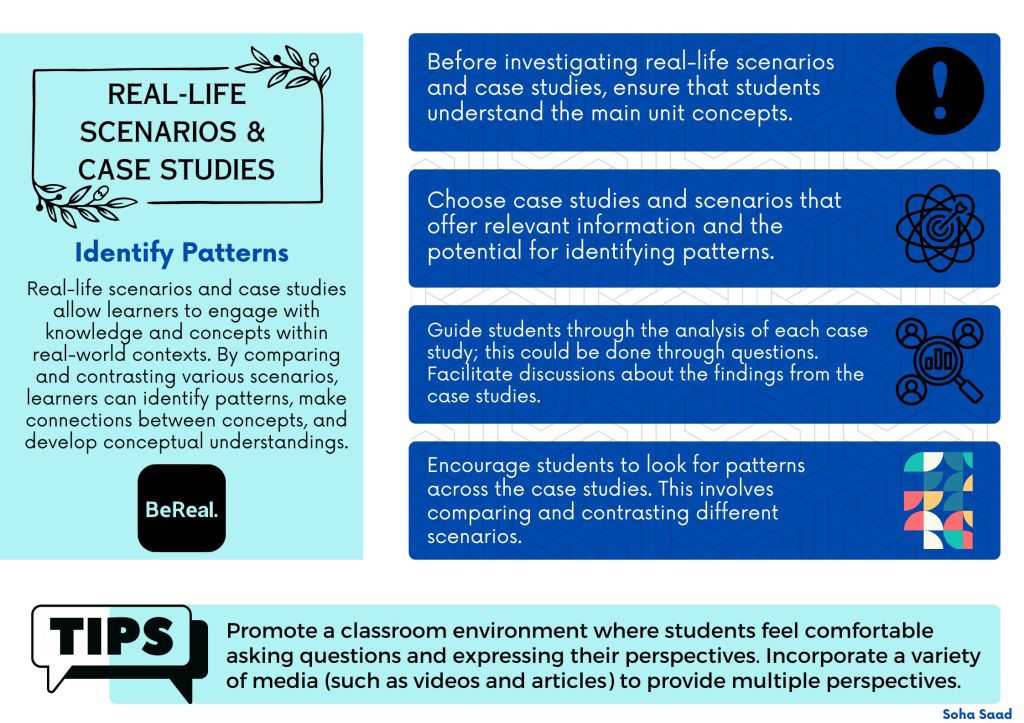
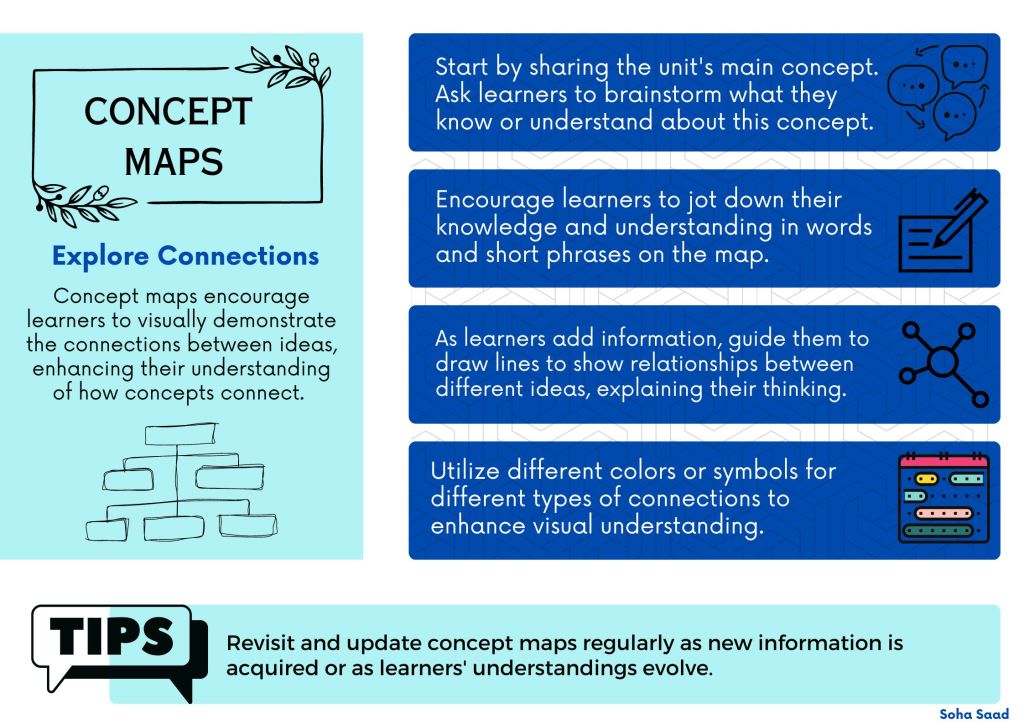
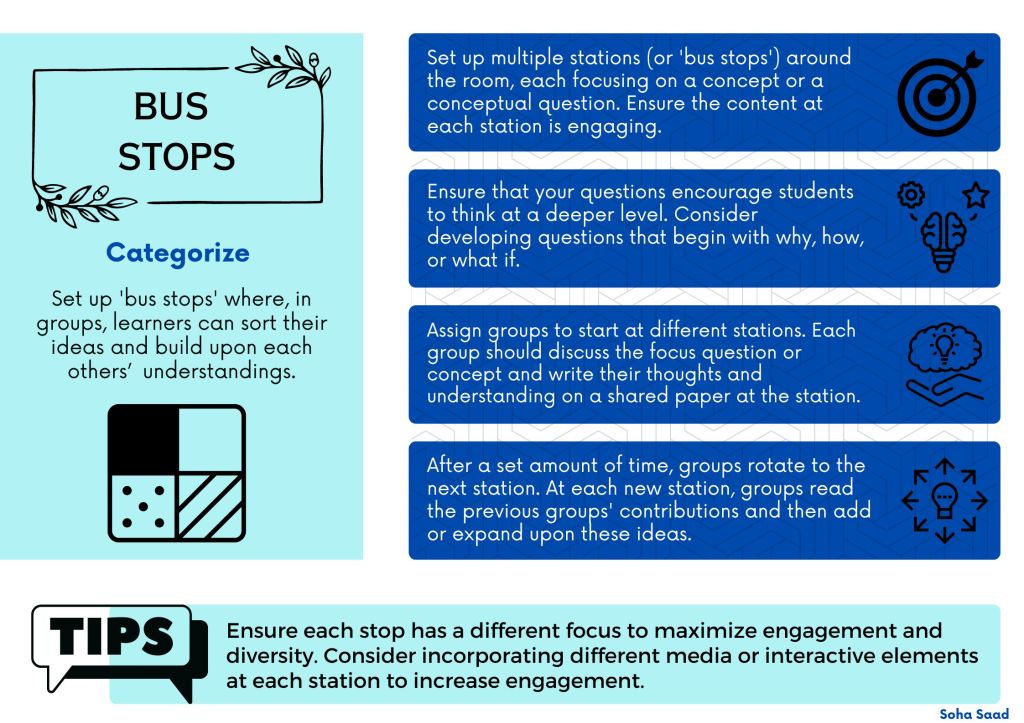
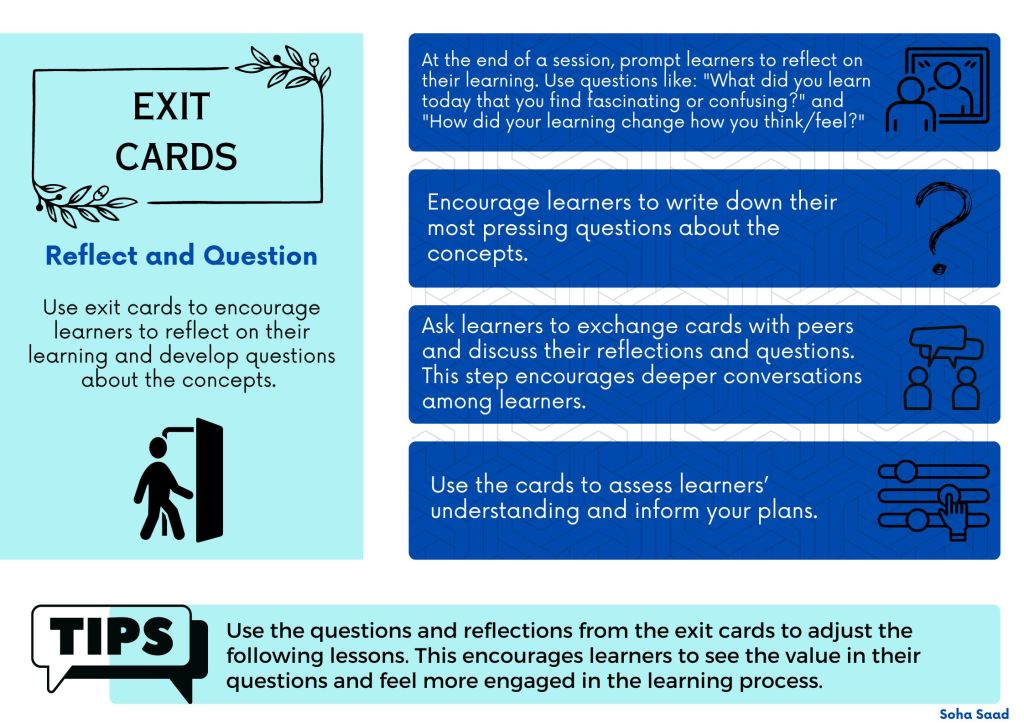
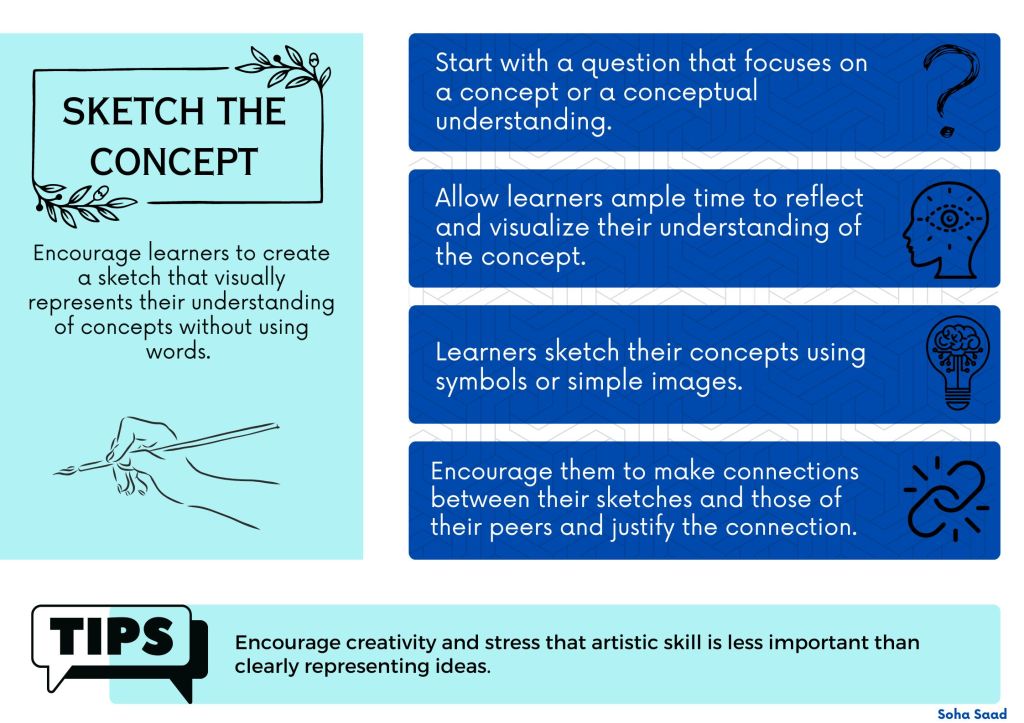
Parvana Guliyeva created great posters to elaborate on the following strategies suggested by the IB:
Classification: Grouping objects or ideas based on shared properties.
Representation: Using models or symbols to explain concepts.
Generalization: Drawing broad principles from specific instances.
Concepts in Use: Applying concepts in practical situations.
Internalization: Integrating concepts into personal knowledge.
Near-Far Transfer: Applying learned concepts to both similar and different contexts.
Interested in taking your teaching practices to the next level? If you’d like to explore these ideas further or get personalized support, feel free to reach out and book a coaching call with me! Contact me on LinkedIn or use this link (https://theorganizedchaosinthepypclassroom.wordpress.com/contact/)



Leave a Reply