
Many educators prompt their students to articulate their conceptual understandings, yet many students may find this challenging for a variety of reasons.
Sometimes it’s a language barrier. Other times, students are stuck thinking of examples and struggle to move toward a transferable understanding. In some cases, it’s simply because we might have missed an important step in the learning process before asking students to share their understanding.
Before students are ready to articulate their understandings:
- They need time to explore concepts.
- They should investigate multiple case studies.
- They need opportunities to make meaningful connections between the concepts.
Establishing the foundation following the steps above build the students capability of expressing clear, thoughtful conceptual understandings.
Here are some strategies you can use to help the students articulate their understanding:
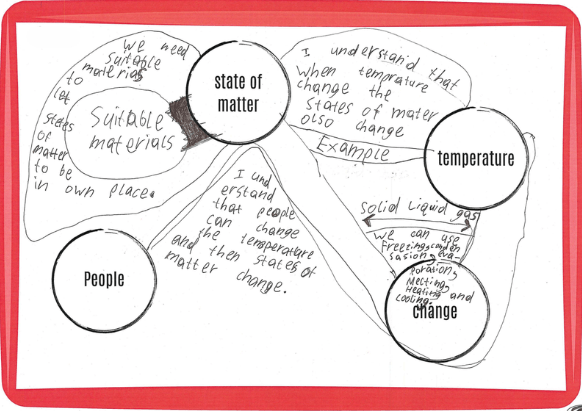
Connecting Concepts
Ask students to choose any two concepts and write a statement that shows the relationship between them.
Once they get the hang of it, add a third concept and have them revise the statement to show a deeper connection. Students who are ready can continue adding more concepts, strengthening the relationships as they go.
Sentence Frames
Give students an incomplete understanding and let them fill in the missing concepts. Pair this with a concept bank or a conceptual question to guide them toward accuracy and precision.
This keeps the cognitive load where it should be: on thinking about the concepts, not trying to craft the perfect sentence from scratch.
Concept-Based Inquiry in Action
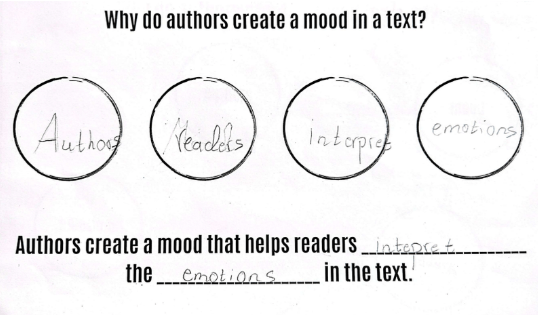
Conceptual Questions and Concept Banks
Pose a conceptual question and ask students to answer it using concepts from the concept bank.
You can co-create the bank with the students before they begin, or build it gradually throughout the unit as new concepts emerge. Both approaches work, depending on how much independence your students are ready for.


 The Organized Chaos In The PYP Classroom
Leave a Reply