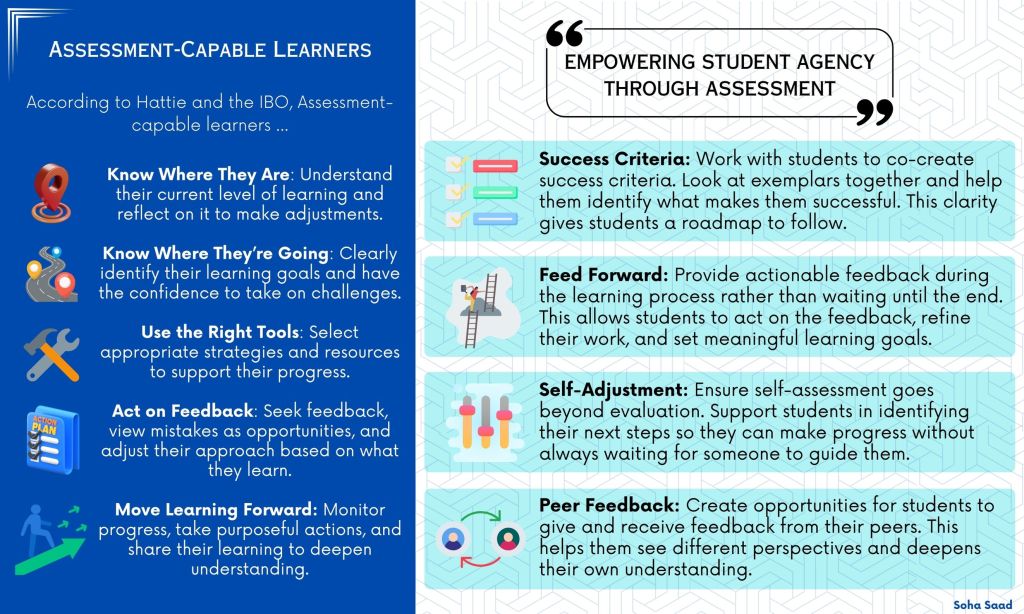
Albert Einstein once said, “Education is not the learning of facts, but the training of the mind to think.” This notion resonates deeply in the IB PYP framework, where the focus shifts from simply delivering knowledge to fostering students’ active participation in their learning. Assessment-capable learners, a concept emphasized by John Hattie and the IB, is at the core of empowering student agency and supporting students in developing their self-regulation skills.
Assessment-Capable Learners
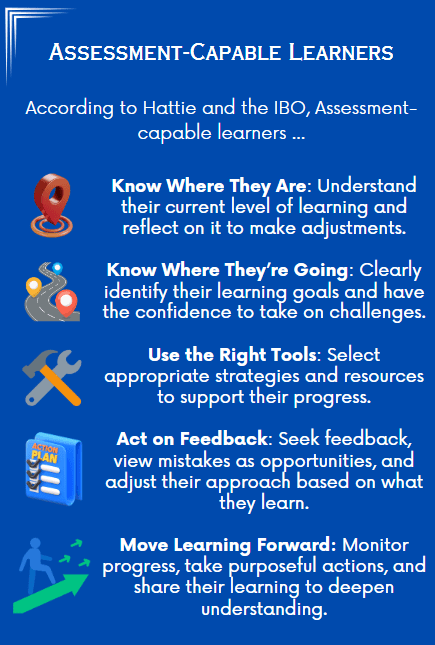
According to Hattie, these learners are characterized by their ability to:
- know their current level of understanding,
- understand where they’re going and have the confidence to take on the challenge,
- select tools to guide their learning,
- seek feedback and recognize that errors are opportunities to learn,
- monitor progress and adjust their learning, and
- recognize their learning and teach others.
(Frey, Hattie, & Fisher, 2018)
The IB extends this understanding by emphasizing that assessment-capable learners are able to reflect on their learning to make adjustments, identify their learning goals and take actions to move their learning forward. They demonstrate autonomy, resilience, and a growth mindset—characteristics of student agency and self-regulation.
(IBO, 2019)
Why We Want Students to Become Self-Regulated Assessment-Capable Learners
For assessment to truly support learning, students must develop the ability to assess their own progress. They need to identify what success looks like, recognize when they’ve achieved it, and know when and where to seek help if they’re struggling.
This goes beyond simply improving students’ assessment skills; it’s about fostering reflection and self-regulation. Students who can self-regulate know when and how to take action, rather than constantly relying on support from others. As John Hattie puts it, the goal is for students to “become their own teachers,” confidently navigating their learning with independence and purpose.
Strategies to Develop Self-Regulated Assessment-Capable Learners
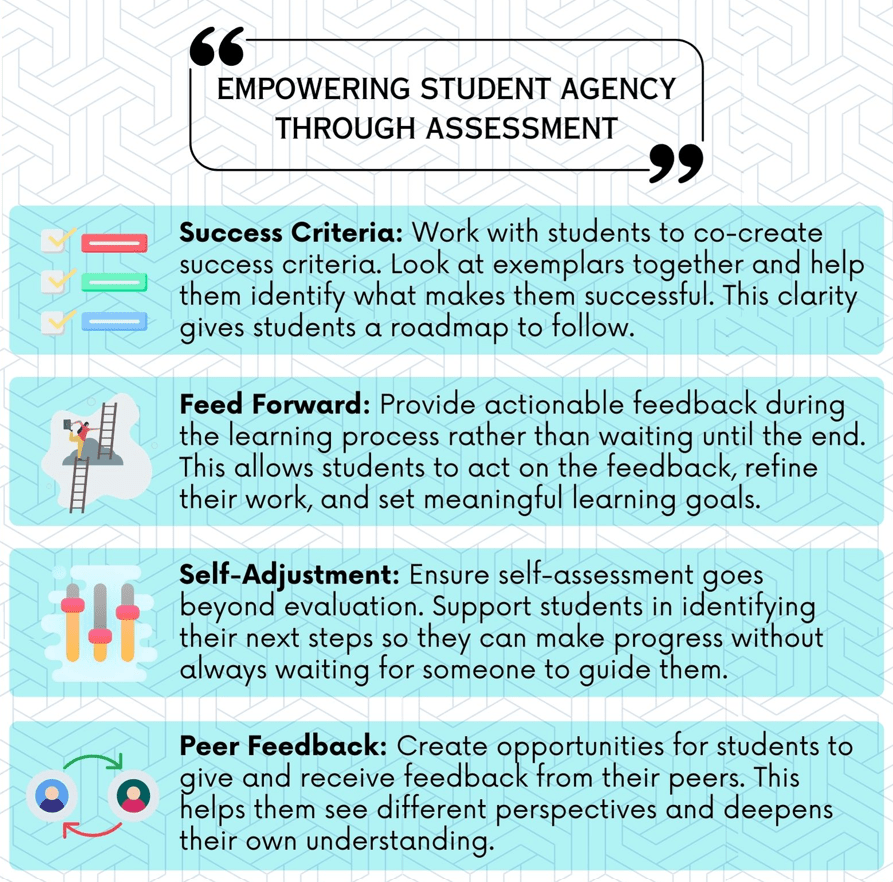
As educators, our role is guiding students toward becoming independent, reflective, and self-regulated learners. Here are key strategies teachers can use to support this process:
Success Criteria
Work with students to co-create success criteria. Look at exemplars together and help them identify what makes them successful. This clarity gives students a roadmap to follow. More information about success criteria can be found here.
Feed Forward
Provide actionable feedback during the learning process rather than waiting until the end. This allows students to act on the feedback, refine their work, and set meaningful learning goals for the future. Strategies to move from feedback to feed forward can be found here.
Self-Adjustment
Ensure self-assessment goes beyond evaluation. Support students in identifying their next steps so they can make progress without always waiting for someone to guide them.
Peer Feedback
Create opportunities for students to give and receive feedback from their peers. This helps them see different perspectives and deepens their own understanding. Here are some visible thinking routine to guide students as they offer feedback to each other.
When we help students develop self-regulation, we’re equipping them with the skills they need to take ownership of their learning and their progress. It’s not about doing the work for them but guiding them to reflect, adjust, and move forward with confidence.
To explore more strategies and resources for supporting assessment-capable learners, check out this Padlet.
https://padlet.com/sohaoak86/assessment-becoming-assessment-capable-bxjqo0lpib5w2f4f
Looking to go deeper with this in your school? I offer coaching and workshops for teams and curriculum leaders. [Learn more here.]
References
- Frey, N., Hattie, J., & Fisher, D. (2018). Developing assessment-capable visible learners, grades K-12: Maximizing skill, will, and thrill. Corwin Literacy.
- International Baccalaureate Organization (IB, 2018). PYP: From Principles into Practice.


 The Organized Chaos In The PYP Classroom
Leave a Reply