The way we guide students has a significant impact on their learning. Traditional feedback focuses on what was done right and what needed improvement after a task is completed. However, a more proactive approach, known as Feed Forward, supports students in taking action to improve their tasks while they are still working on them. Marshall Goldsmith and Joe Hirsch, pioneers of the feed forward concept, argue that feedback can often result in negative feelings, especially if students are not given a chance to act on it immediately. On the other hand, Feed Forward empowers students by providing them with opportunities to enhance their performance during the learning process.
What is Feed Forward?
Feed Forward is all about helping students improve as they work on their tasks. Unlike traditional feedback, which focuses on past performance, Feed Forward involves a dialogue between educators and students to enhance future performance. It emphasizes student agency, giving them a voice in the process and focusing on what needs to be done to succeed.
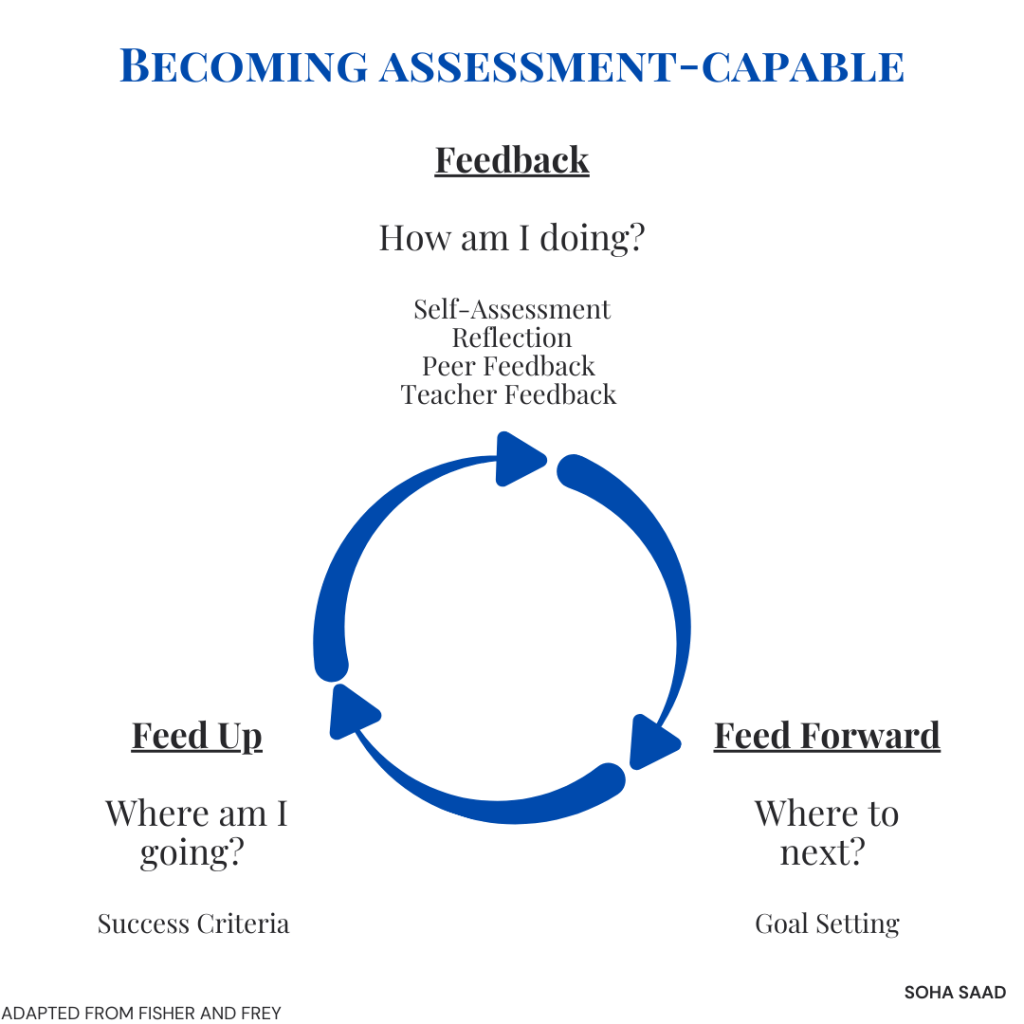
In order for feed forward to be successful, teachers must ensure that they feed up the students (Where am I going?). It is crucial that teachers clearly identify to the student what success looks like. This can be done by sharing success criteria and viewing exemplars and non-exemplars. Teachers should also that students are receiving feedback, not just from teachers, but also from peers and self-assessment. This helps the students identify their strengths and areas of development and supports them in moving forward with their learning by setting goals.
Implementation Strategies
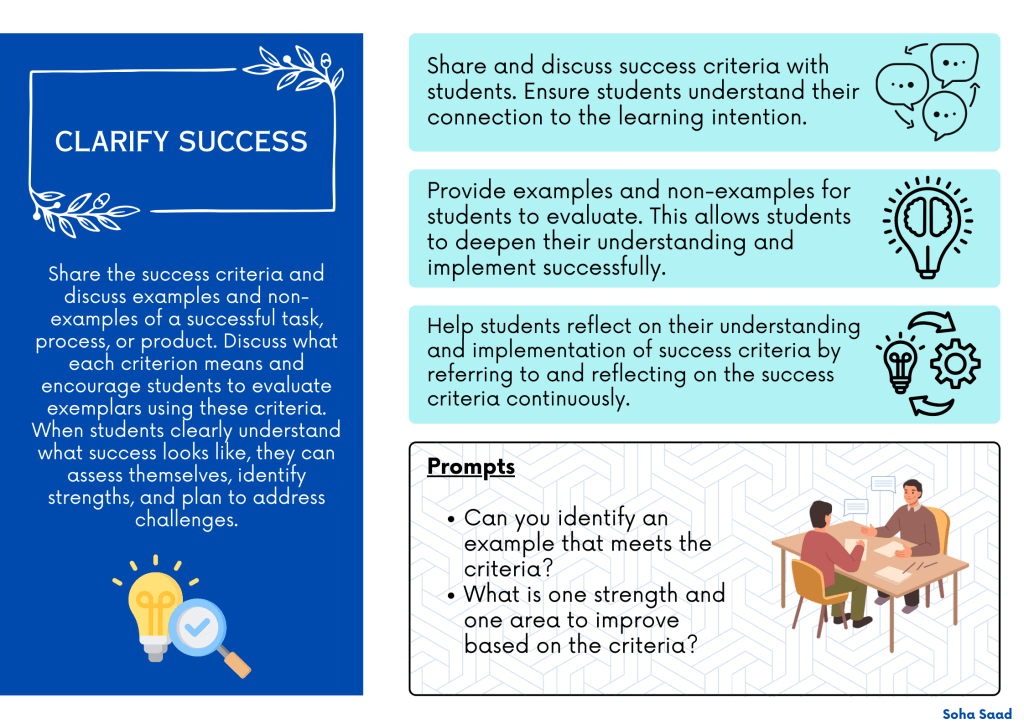
Clarify Success: Ensure that students understand what success look like, you can share the success criteria and view examples and non examples of a successful task, process or product. Discuss what each criterion means and encourage them to evaluate exemplars using these criteria. When students have a clear understanding of what success looks like, they can assess themselves, identify strengths, and plan to address challenges.
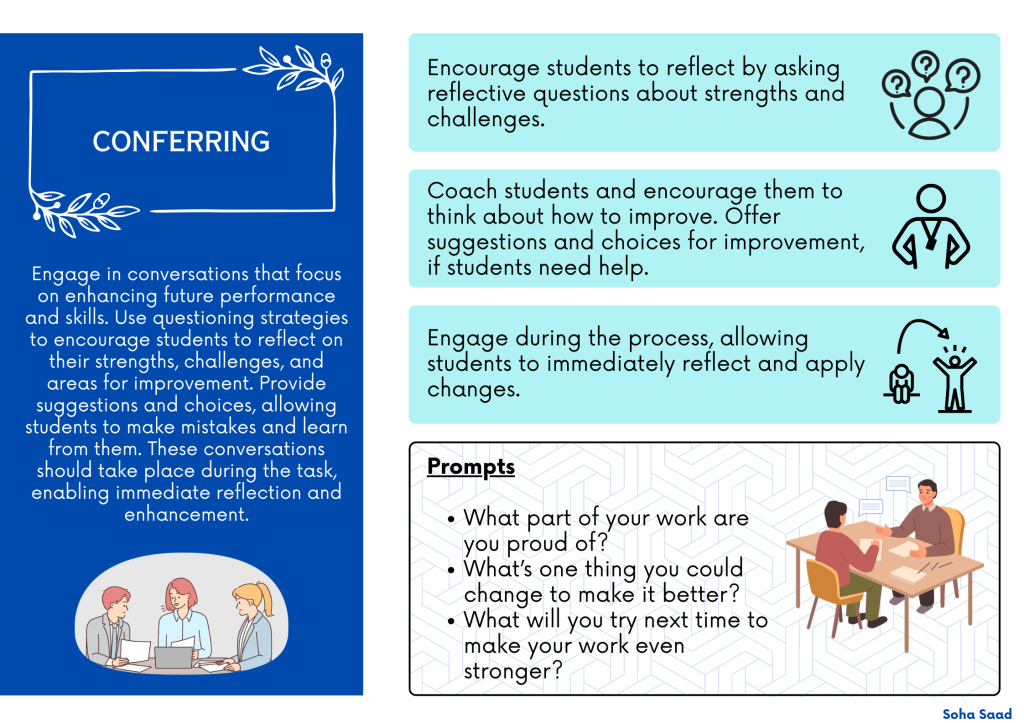
Conferring: Engage in conversations that focus on enhancing future performance and skills. Use questioning strategies to encourage students to reflect on their strengths, challenges, and areas for improvement. Provide suggestions and choices, allowing students to make mistakes and learn from them. These conversations should take place during the task, enabling immediate reflection and enhancement.
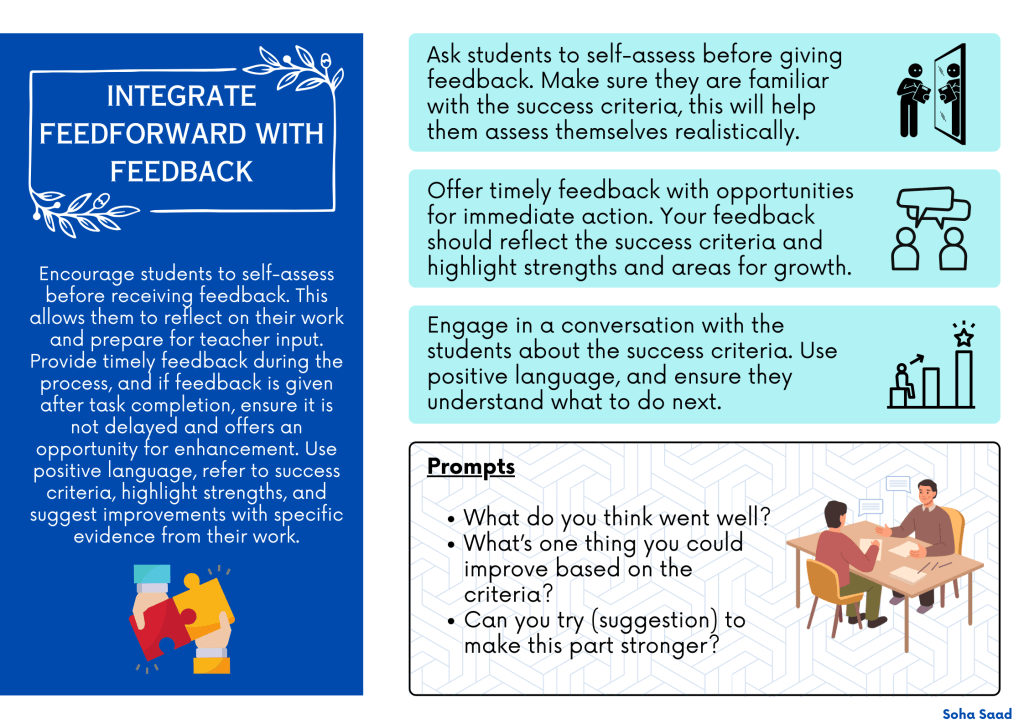
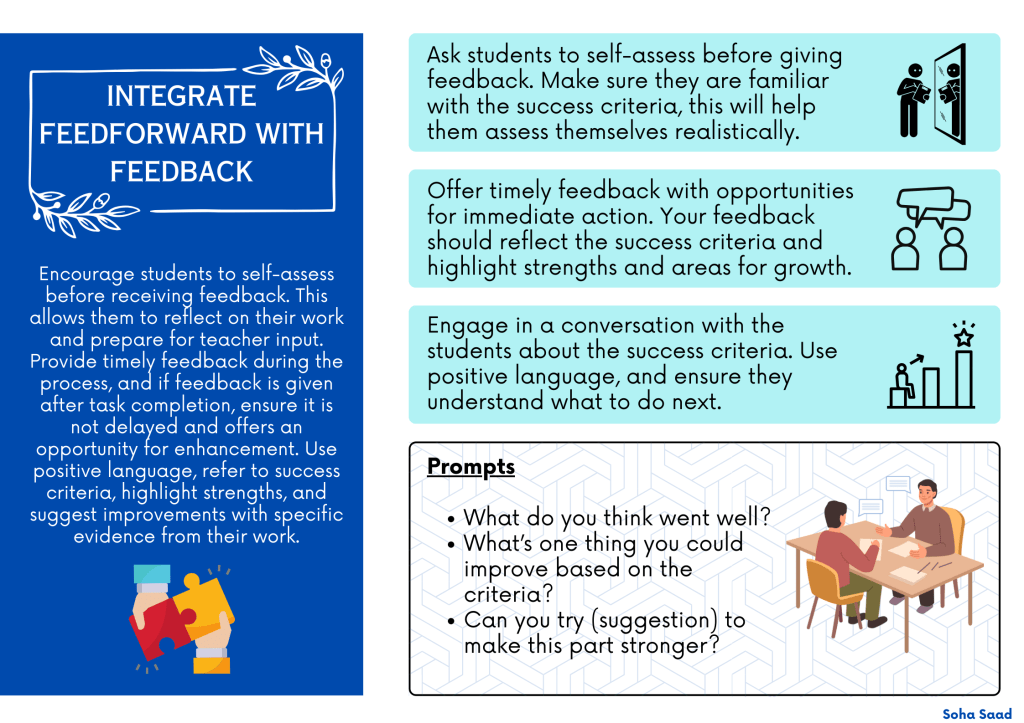
Integrate Feedforward with Feedback: Encourage students to self-assess before receiving feedback. This allows them to reflect on their work and prepare for teacher input. Provide timely feedback during the process, and if feedback is given after task completion, ensure it is not delayed and offers an opportunity for enhancement. Use positive language, refer to success criteria, highlight strengths, and suggest improvements with specific evidence from their work.
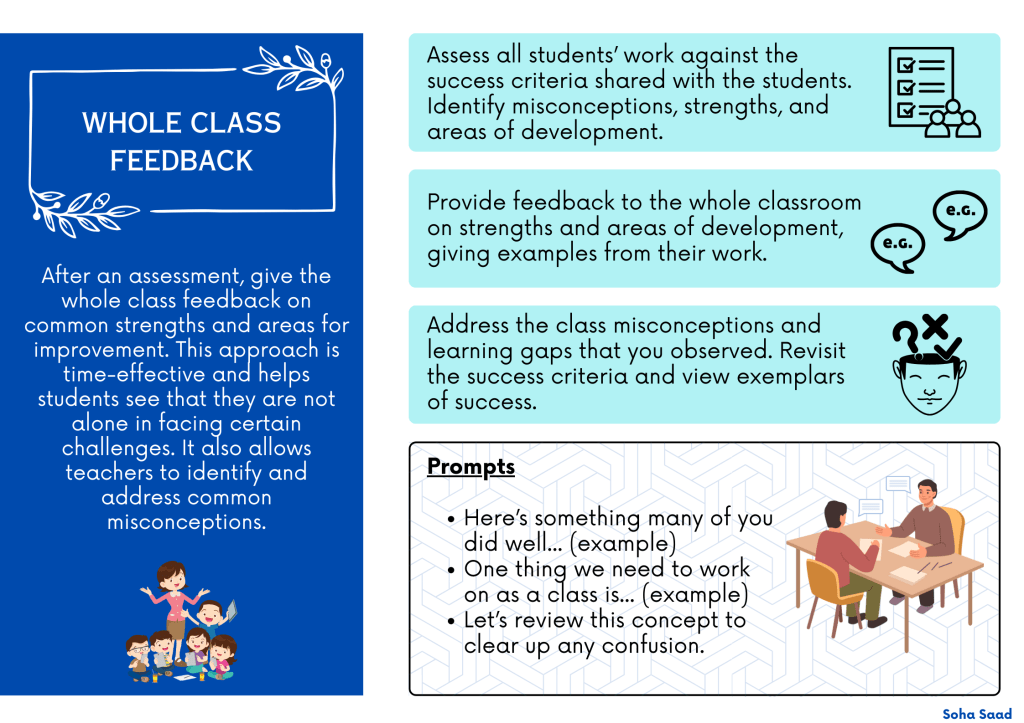
Whole Class Feedback: After an assessment, give the whole class feedback on common strengths and areas for improvement. This approach is time-effective and helps students see that they are not alone in facing certain challenges. It also allows teachers to identify and address common misconceptions.
Prompts and Sentence Starters for Feed Forward
To help educators implement Feed Forward effectively, here are some prompts and sentence starters:
- Reflective Questions:
- What do you think is going well so far?
- Can you identify any challenges you’re facing with this task?
- What strategies have you tried, and how have they worked for you?
- Enhancement Suggestions:
- Have you considered trying [specific strategy] to improve this part?
- What if you approached this problem by [suggestion]?
- Think about how you could [specific action] to enhance your work.
- Goal Setting:
- Based on your self-assessment, what is one goal you want to set for this task?
- What steps will you take to achieve this goal?
- Which resources or tools can help you reach your goal?
- Encouragement:
- I can see you’ve put a lot of effort into this. How can we build on that?
- Your progress is evident here. What’s the next step you plan to take?
- You’re on the right track. What do you think you can do to take it further?
Classroom Examples
Feedback Integrated with Feed Forward
Combining feedback with Feed Forward means providing specific, actionable actions that students can use immediately to improve their current and future tasks. Here are some examples:
Writing
Feedback: “Your introduction is strong and clearly sets up the topic. However, the transition to the main body could be smoother.” By saying this, you have identified strengths and areas of development.
Feed Forward: “Try to use a linking sentence that connects your introduction to the first paragraph of the main body. For example, you could say, ‘This issue is explored …’ This will help your readers follow your argument more easily.”
To help the student move forward, you need to inform them about how they can develop their writing.
Math
Feedback: “You got the right answer for this subtraction problem, but you skipped a few steps in showing your work.”
Feed Forward: “Next time, try to write out each step to make sure you’re following the process. For example, write down the numbers you’re borrowing. Can you go back and add those steps in here? This will help you remember each part.”
By shifting from only feedback to feed forward, educators can create a more supportive and proactive learning environment. This approach not only enhances student performance but also empowers them to take charge of their learning , fostering a growth mindset and ongoing improvement.
Visit this Padlet to learn more about developing assessment-capable students: https://padlet.com/sohaoak86/assessment-becoming-assessment-capable-bxjqo0lpib5w2f4f
Looking to go deeper with this in your school? I offer coaching and workshops for teams and curriculum leaders. [Learn more here.]

 The Organized Chaos In The PYP Classroom
Leave a Reply