
The investigation or ‘finding out’ phase of the inquiry is an important one. This is where students actively engage in exploring and discovering. In this post, we’ll look at how structured and guided inquiry methods play a crucial role in this phase, enhancing the learning experience for students.
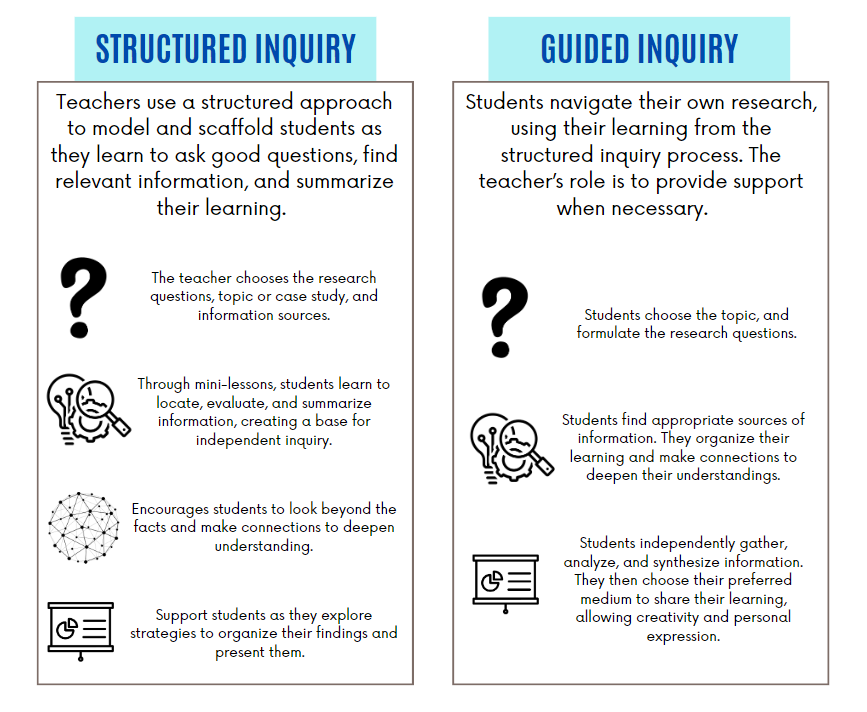
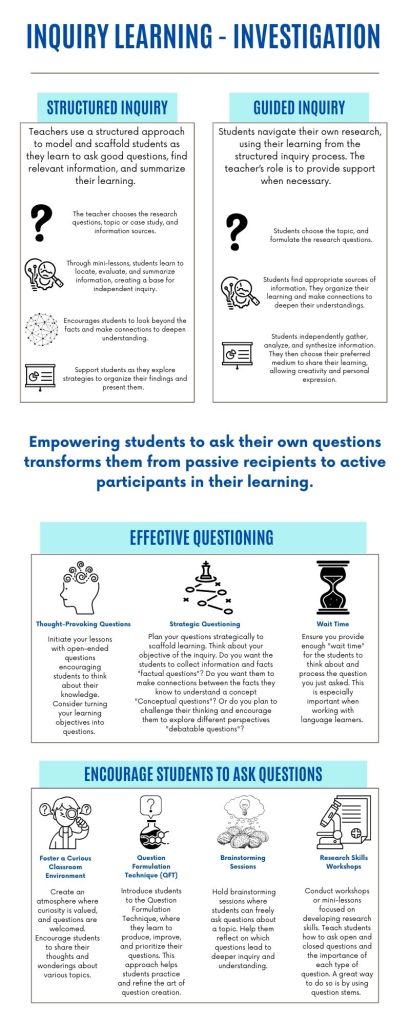
Structured inquiry involves the teacher leading the class through a common topic with well thought-out questions and resources. Guided inquiry, in contrast, offers students more autonomy. They choose their topics and apply their knowledge, skills, and understanding with the teacher providing the necessary guidance and support.
Structured Inquiry: Exploring Together with a Common Focus
In a structured inquiry model, the entire class explores a single case study or topic. The teacher carefully plans this process through a series of guiding questions, thoughtfully selected resources, and a focus on teaching research skills. This will help them navigate the guided inquiry independently.
Teacher Questions: Here, the teacher’s role is important. By posing specific, targeted questions, educators guide students through the investigation process. These questions are designed not only to find information but also to encourage deeper thinking and skills development.
Research Skills: Plan mini-lessons that support students in honing their research skills. This includes formulating good questions, finding relevant information, and summarizing learning.
Organizing Information: Teach students strategies to organize their learning to make connections and develop understandings. Students can use organizers to make sense of their acquired information, summarize it in writing, or create a visual.
Presenting Findings: Introduce students to different ways of presenting their findings. This diversity caters to different learning styles and encourages innovation.
Guided Inquiry: Student-Led Investigation
Once students are familiar with the structured inquiry process, they are ready for guided inquiry. Students are exploring content determined by the teacher; however, they choose the exploration topic. Teachers continue to support the students as they navigate the guided inquiry.
Choosing Their Focus: Students select their own topics or case studies, driven by their interests and curiosities.
Formulating Questions: Using the skills developed earlier, students create their own set of questions to guide their inquiry.
Organizing and Presenting Findings: Students learn to independently gather, analyze, and synthesize information. They then choose their preferred medium to share their learning, allowing creativity and personal expression.

Using Questions In The Inquiry Classroom
In our ongoing exploration of inquiry-based learning, an essential component is understanding the power of questions, from teachers and students. Questions are the essence of inquiry. They ignite curiosity, drive research, and shape understanding. In this context, the teacher’s role goes beyond delivering knowledge; it becomes about crafting questions that provoke thought and inspire exploration. Simultaneously, we aim to empower students to not just answer questions but to ask them. This shift from responding to asking questions marks a critical step in developing independent, critical thinkers.
How can teachers effectively use questions to guide the inquiry process?
How students can be encouraged and taught to formulate their own questions?

Effective Questioning
Inquiry-based learning thrives when teachers ask the right questions at the right time. So, what are some strategies educators can use to ask the right questions?
Classroom Discussions: Using questions can encourage students to share their opinions and listen to others’ perspectives as they engage in class discussions. It helps create a collaborative learning environment where students learn to respect and learn from each other’s perspectives.
Thought-Provoking Questions: Initiate your lessons with open-ended questions encouraging students to think about their knowledge. Consider turning your learning objectives into questions that engage the students in learning about a topic or a concept.
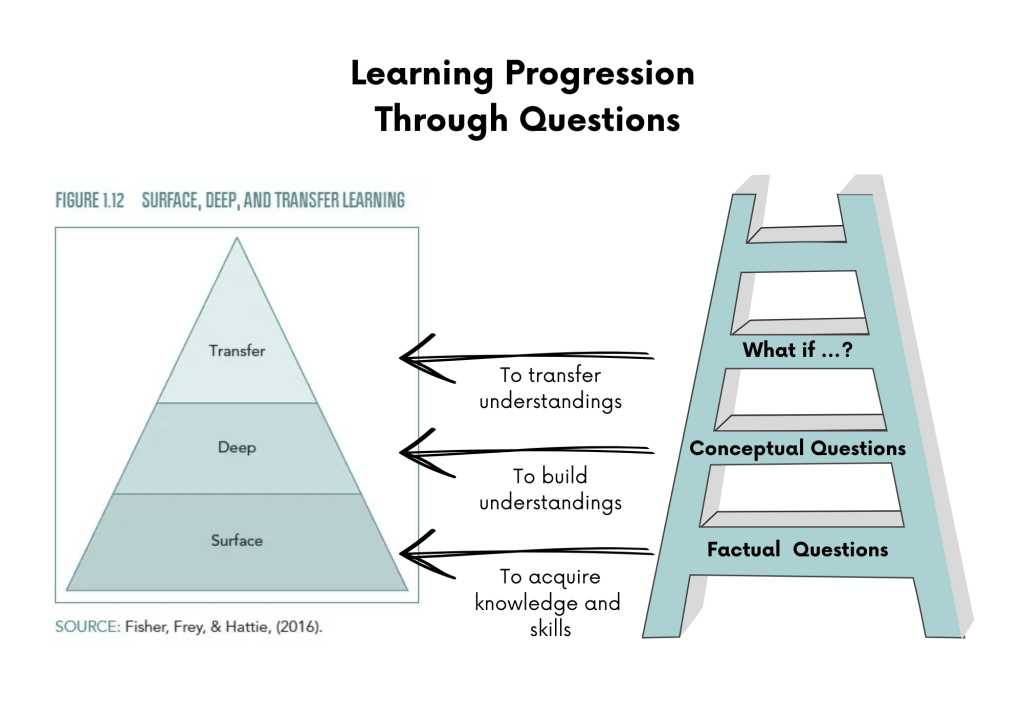
Strategic Questioning: Plan your questions strategically to scaffold learning. Think about your objective of the inquiry. Do you want the students to collect information and facts “factual questions”? Do you want them to make connections to come up with an understanding “Conceptual questions”? Or do you plan to challenge their thinking and encourage them to explore different perspectives “debatable questions”?
Wait Time: Ensure you provide enough “wait time” for the students to think about and process the question you just asked. This is especially important when working with language learners.
Socratic Questioning: Socratic questioning is an approach the teacher uses to model critical thinking and encourage dialogue with the students. To learn more about it, check this resource.
Encourage Students To Ask Questions
A key goal of inquiry-based learning is to shift students from passive learners to active participants in their learning journey. This involves encouraging them to ask their own questions.
Here are some strategies and tips to facilitate this process:
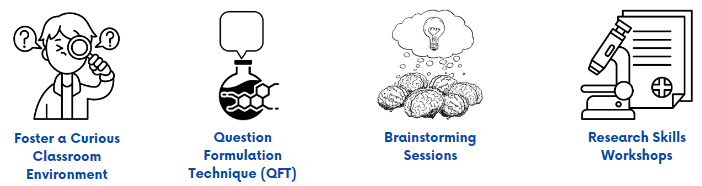
Fostering a Curious Classroom Environment: Create an atmosphere where curiosity is valued, and questions are welcomed. Encourage students to share their thoughts and wonderings about various topics.
Question Formulation Technique (QFT): Introduce students to the Question Formulation Technique, where they learn to produce, improve, and prioritize their questions. This approach helps students practice and refine the art of question creation. More details can be found at https://rightquestion.org/what-is-the-qft/.
Brainstorming Sessions: Hold brainstorming sessions where students can freely ask questions about a topic. Help them reflect on which questions lead to deeper inquiry and understanding. Using provocations can make brainstorming sessions exciting.
Research Skills Workshops: Conduct workshops or mini-lessons focused on developing research skills. Teach students how to ask open and closed questions and the importance of each type of question. A great way to do so is by using question stems.
Questions stems for closed questions: Who? Where? When? What?
Questions stems for open questions: What would happen if? I wonder why? How?
The essence of inquiry-based learning lies in the art of questioning, where both teachers and students play critical roles. By mastering the skill of asking the right questions and fostering an environment where students are encouraged to inquire and explore, we support students in developing deeper understandings and becoming lifelong learners.
Looking to go deeper with this in your school? I offer coaching and workshops for teams and curriculum leaders. [Learn more here.]


 The Organized Chaos In The PYP Classroom
Leave a Reply