
Inquiring through play allows us to explore concepts authentically, wonder, communicate with others, have fun, and investigate, and it is for older children as well as the little ones.
A human being’s natural instinct is to explore, and we can see it happening naturally with babies; if you tell a baby to stay away from touching a hot object because it will hurt, they won’t stop until they try it themselves. We learn about how the world works through first-hand experiences, we see things or approach unfamiliar situations, and our minds go a mile a minute wondering how it works or why it is the way it is. In my opinion, this is the reason people enjoy learning through play the most, and when I say “we,” I mean adults as well as children.
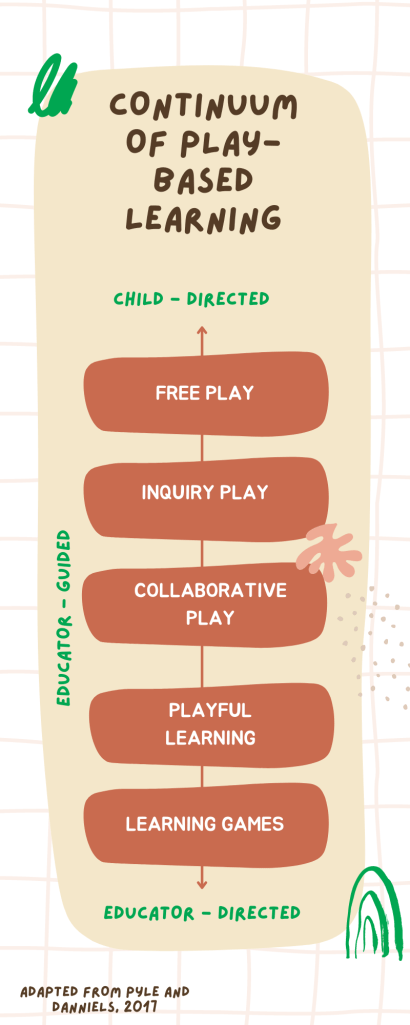
Pyle and Danniels (2017) introduced the play-based learning; they identified the role of educators in each play type.
Free play is …
- child-initiated,
- not teacher-directed by any means,
- an opportunity for the children to authentically and confidently demonstrate their learning and demonstrate their skills,
Educators’ Role: Observe, Reflect, Facilitate.
- an opportunity for the teachers to step back, observe, and learn about children’s abilities and interests,
- facilitated by teachers by offering resources needed and uninterrupted playtime.
Inquiry Play …
- is child-led,
- is guided by educators,
- supports children in developing skills, acquiring knowledge, and making connections,
- provides authentic opportunities for children to develop their literacy and mathematical skills and understanding.
Educators’ Role: Extend child-initiated ideas & explorations through questions, provocations, investigations
- Educators listen to children and extend their thinking by asking open-ended questions.
- Educators provide an environment that supports children’s inquiries.
Collaborative Play …
- is child-led,
- is directed by educators as they provide support.
- Children have fun while learning.
- Children learn from peers and educators.
Educators’ Role: Use opportunities to enter children’s play & incorporate targeted skills into their play.
- Involves intentional integration of literacy materials.
- Educators can target specific skills and learning outcomes by playing with children.
Playful Learning …
Focus on targeted skills in learning experiences that can incorporate children’s play narrative.
- Planned by educators as a response to children’s interests.
- Learning outcomes and specific skills could be integrated into the process.
- The environment is set up to ensure children are able to meet specific outcomes.
- Even though educators plan it, it still honors student agency as it honors their interests and supports their natural tendency to learn and have fun.
- Children are encouraged to self-assess as they play.
Learning Games …
Prescribed activities “focused skills, usually literacy & numeracy skills.”
- is educator-guided,
- is guided by literacy, numeracy, and other learning outcomes.
- Children acquire social skills and are exposed to different conflict resolution strategies.
- Structured and following rules is critical.
Classroom Examples:
Here are some practical examples for each play type, these examples will highlight the interactions between student initiative and educator response in early years, and primary contexts.
Free Play
Early Years: The Block Tower
Young Lila found some wooden blocks. One by one, she started creating a tower, each block placed with precision. Soon, Aiden joined, suggesting a broader base for stability. The tower’s height grew, drawing a small crowd.
Educator’s Note: I watched from a distance, resisting the urge to guide. When the tower fell, they started talking about what made it fall and discussing balance in their own simple words.
My role? Tomorrow, I’ll introduce books on buildings and famous towers, igniting more ideas and exploration.
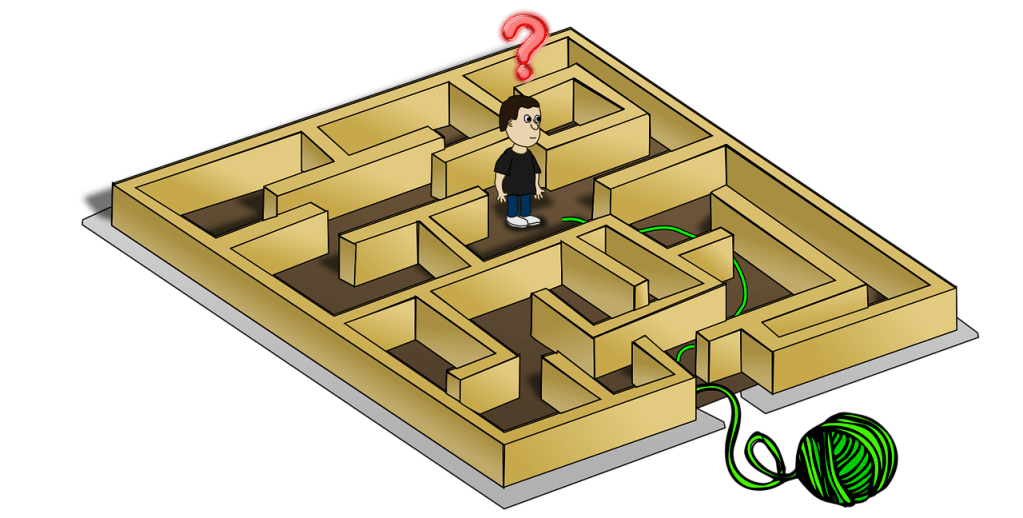
Primary: Navigating Mazes
Rohan, fascinated by a book on labyrinths, used chalk to draw a large maze on the playground. As friends tried navigating it, they suggested modifications, and soon, multiple mazes intertwined.
Educator’s Note: Building on this integration of math and play, I introduced the students to a maze-design software in our next math session. While creating virtual mazes, they delved deeper into geometry and spatial reasoning.

Inquiry Play
Early Years: Nature’s Mini Beasts
The teachers took the students to the park to provoke their curiosity about their next unit, Mini Beasts. Outside, Max, with curious eyes, held up a ladybug. “Why spots?” he said.
Educator’s Note: Fetching a magnifying glass, we closely observed. I asked, “What might the spots tell other creatures?” Tomorrow, we’ll dive into the world of bugs, guided by Max’s question, and encourage others to share their wonders.
Primary: Historical Detectives
Sophia and Aaron found an old diary in the library. Skimming, they discovered tales of local legends. Curious, they began mapping mentioned landmarks.
Educator’s Note: Observing their deep engagement, I introduced them to primary and secondary source differentiation. They dove into separating facts from tales, eventually presenting their findings to classmates.
Collaborative Play
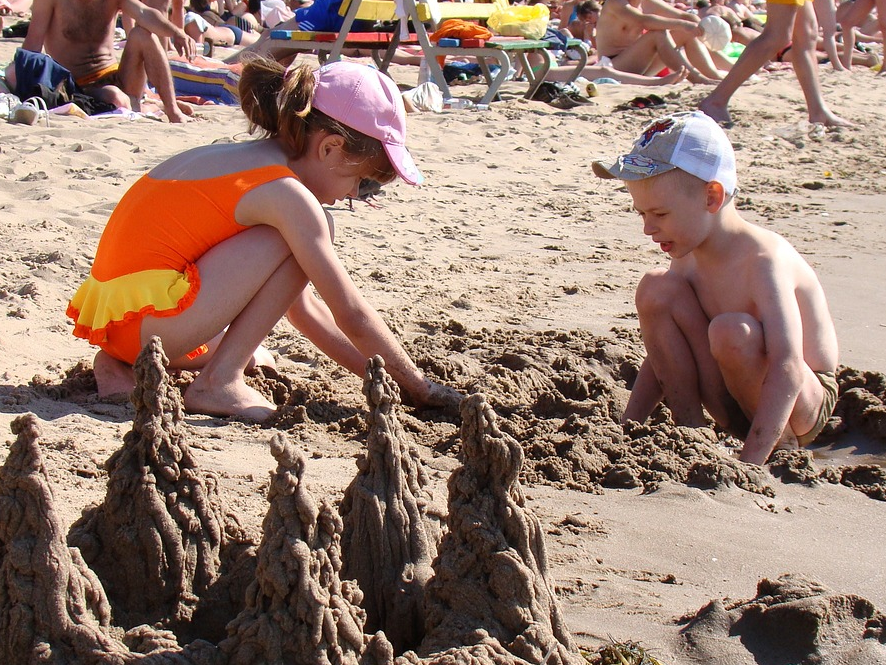
Early Years: Sandcastles
At the sandbox, little Mia and Noah decided today was the day for castles. Mia started by digging moats, while Noah fetched water in his tiny bucket. When Mia’s moat kept collapsing, Noah shared his secret: “We need wet sand!”
Educator’s Note: Observing their teamwork, I introduced some shells and twigs, suggesting they could be used as decorations or castle flags. The duo excitedly began placing them, discussing where each piece fit best.
Primary: Recycling
In the classroom’s corner, Ella and Jayden built a recycling station using cardboard boxes. They assigned roles: Ella sorted, while Jayden labelled each box. Struggling with categorizing some items, they referenced posters on the wall.
Educator’s Note: Recognizing their initiative, I approached them with various materials, suggesting that they could create recycling signs. They excitedly started sketching, blending their individual ideas into symbols for glass, paper, and plastics. The entire class soon joined in, turning their project into a recycling campaign.
Playful Learning
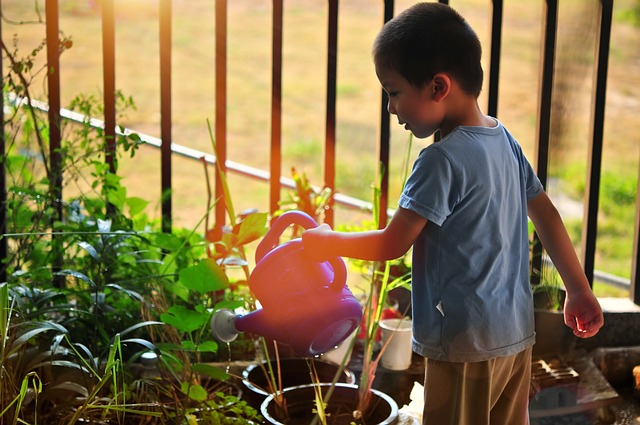
Early Years: Planting Seeds
Mia, inspired by a story, wanted to plant. Holding a seed, she wondered, “Will it be a tree?”
Educator’s Note: I provided pots, soil, and labels. As Mia planted, I guided her to document the process. This activity will evolve into a daily observation routine, blending structured learning with Mia’s playful curiosity.
Primary: Math Market
For a math lesson, Olivia and Max set up a classroom market with pretend money. They priced items and ‘shopped’, calculating totals and giving change.
Educator’s Note: I introduced more complex transactions, like discounts. Their initial game transformed into a lively session on percentages and decimals.

Learning Through Games
Early Years: Treasure Hunt
A treasure chest was hidden within the school garden. Mia found instructions; she read them with the help of her teacher: “To find the treasure, count all the red flowers, then take 5 steps from the big tree.” Mia and her friends excitedly solved each clue. They utilized basic numeracy skills and spatial awareness.
Educator’s Note: Integrating math with adventure, the activity not only reinforced counting but also instilled collaborative problem-solving.
Primary: Literary Detective Hunt
Clues scattered around the classroom led students on a literary investigation. As they decoded the hints, they were tasked with reconstructing fragmented plots of classic tales. Liam, holding a series of clues including a smoggy skyline, a corset, and a typewriter, pieced them together. His conclusion? The setting of his mystery story was Victorian London, and his main character was an ambitious young woman, perhaps an early journalist battling societal norms.
Educator’s Note: Through this activity, students delved into literary settings, characters, and themes. The game fostered a deep exploration into the nuances of storytelling, prompting them to construct narratives based on the cues they received.
I collected some more resources in the following Padlet: https://padlet.com/sohaoak86/play-based-learning-ycnud5xkylxe


 The Organized Chaos In The PYP Classroom
Leave a Reply